MENU
LT | EUR

LT | EUR
-
- All Pipettes, Dispensers & Automated Liquid Handlers
- Mechanical Pipettes
- Electronic Pipettes
- Multi-Channel Pipettes
- Positive Displacement Pipettes & Dispensers
- Bottle-Top Dispensers
- Pipette Controllers
- Dispenser & Pipette Accessories
- Automated Pipetting
- Automation Consumables
- Automation Accessories
- Liquid Handler & Pipette Services
Sorry, we couldn't find anything on our website containing your search term.
Sorry, we couldn't find anything on our website containing your search term.
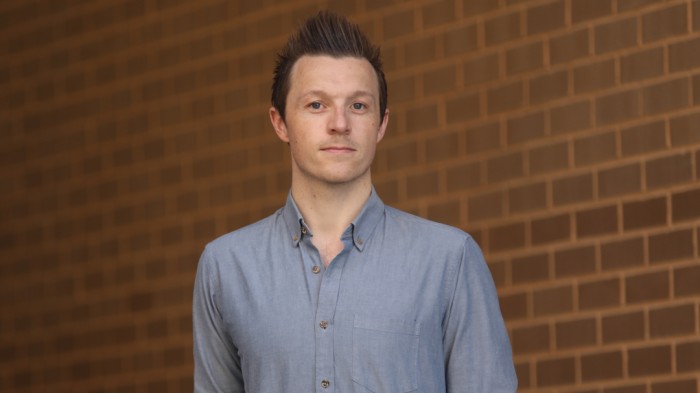
2021 Prize Finalist Dr. Justin Rustenhoven
Washington University in St. Louis USA
Justin Rustenhoven received his undergraduate degrees and Ph.D. in Pharmacology at the University of Auckland in New Zealand. His doctoral thesis in the laboratory of Professor Mike Dragunow focused on the contribution of brain pericytes in neuroinflammatory responses. Dr. Rustenhoven is currently a postdoctoral research fellow in the laboratory of Professor Jonathan Kipnis at Washington University in St. Louis, where he explores the mechanisms underlying immune surveillance of the central nervous system from the brain borders. Here, he investigates how the brain and spinal cord and its surrounding tissues engage in a bidirectional neuroimmune dialogue to recognize perturbations and respond accordingly to promote brain homeostasis.
A Privileged Brain
Our immune system and central nervous system (CNS) continuously surveil our environment and adjust on demand to maintain homeostasis. Yet despite their commonalities, the classical dogma suggested a disconnect between these two systems and an inability to mount a functional immune response to nervous tissue insults – referred to as CNS “immune privilege”. But why would our brain, arguably our most complex and delicate organ, lack such a fundamental arrangement to detect dysfunction? Justin Rustenhoven, under the guidance of Professor Jonathan Kipnis, aimed to address this question and in doing so uncovered a privileged bidirectional dialogue between the immune system and the CNS, situated at the brains border. His experiments revealed how immune cells situated in tissues surrounding the brain continuously surveil the CNS environment through soluble factors in the cerebrospinal fluid to recognize perturbations. Further, he demonstrated that the CNS contains its own bespoke immune reservoir in the skull and vertebrae bone marrow, capable of dispensing immune cells directly to the brain and spinal cord following diverse insults. These findings revealed the uniqueness of our brains immunological orchestration, allowing for the recognition of CNS dysfunction from a distal site, and a local reservoir of tailor-made cells with preferential CNS access, ready to respond to perceived insults.
A Privileged Brain
Our immune system and central nervous system (CNS) continuously surveil our environment and adjust on demand to maintain homeostasis. Yet despite their commonalities, the classical dogma suggested a disconnect between these two systems and an inability to mount a functional immune response to nervous tissue insults – referred to as CNS “immune privilege”. But why would our brain, arguably our most complex and delicate organ, lack such a fundamental arrangement to detect dysfunction? Justin Rustenhoven, under the guidance of Professor Jonathan Kipnis, aimed to address this question and in doing so uncovered a privileged bidirectional dialogue between the immune system and the CNS, situated at the brains border. His experiments revealed how immune cells situated in tissues surrounding the brain continuously surveil the CNS environment through soluble factors in the cerebrospinal fluid to recognize perturbations. Further, he demonstrated that the CNS contains its own bespoke immune reservoir in the skull and vertebrae bone marrow, capable of dispensing immune cells directly to the brain and spinal cord following diverse insults. These findings revealed the uniqueness of our brains immunological orchestration, allowing for the recognition of CNS dysfunction from a distal site, and a local reservoir of tailor-made cells with preferential CNS access, ready to respond to perceived insults.
Read more
Downloads

PDF 2.17 MB